





Introduction
Swing trading is one of the most practical trading styles for beginners because it sits between long-term investing and high-pressure day trading. Instead of reacting to every small intraday move, swing traders aim to capture part of a larger move that develops over several days or weeks.
That makes it appealing for traders who want more time to think, plan, and manage risk. But swing trading is not just about holding positions longer. It is about trading with structure, patience, and a clear exit plan.
Swing trading works best when the goal is not perfection, but consistency.
If you are trying to learn how to swing trade, the good news is that the process becomes much easier when you break it down into a few repeatable steps.
1. Understand What Swing Trading Really Means
Swing trading is not about buying something and hoping it goes up eventually. It is about identifying a tradable move inside a broader trend or market structure.
For example, a swing trade might involve:
- buying a pullback in an uptrend
- entering after a breakout from consolidation
- trading a reversal from a major support zone
The goal is simple: capture a meaningful part of the move while keeping risk under control.
2. Focus on Strong Charts, Not Random Charts
One of the fastest ways to improve as a swing trader is to stop forcing trades on weak or messy charts. Not every chart deserves your attention.
Look for setups that show:
- clear trend direction
- recent respect for support or resistance
- improving momentum or participation
- a trade idea that is easy to explain in one sentence
If the chart feels confusing before you enter, it will usually feel even worse once money is on the line.
3. Use the Daily Chart for Context and the 4-Hour Chart for Timing
A simple multi-timeframe approach can make swing trading much more manageable.
Use the daily chart to understand the larger trend and the 4-hour chart to refine your entry. This helps you avoid reacting to random short-term noise.
For example, if the daily chart is still trending higher and the 4-hour chart shows a controlled pullback into support, that often gives you a much stronger setup than chasing a sudden move on a very short timeframe.
4. Plan the Trade Before You Enter
Before placing the trade, define the full setup in plain language.
Ask yourself:
- Why am I entering here?
- Where is the trade invalid?
- What would a successful trade look like?
- Where will I take partial profits?
A good swing trade should make sense before the market starts moving.
5. Set a Stop Loss Based on Structure
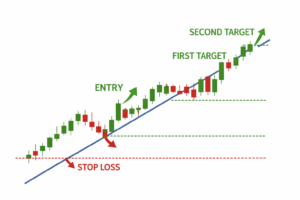
A stop loss should not be random. It should sit at the point where the trade idea no longer makes sense.
If you are buying support, the stop usually belongs below that support zone. If you are buying a breakout, the stop may belong below the breakout base.
A stop loss is not there to make you feel safe. It is there to define where the trade is wrong.
This approach is more useful than choosing an arbitrary percentage without considering the chart.
6. Think in Target Zones Instead of One Perfect Exit
Many beginners become too attached to one exact target. Markets do not always reverse at perfect numbers. They often react in zones.
Useful target areas may include:
- previous highs
- major resistance zones
- round psychological price levels
- supply-heavy areas on the chart
This is one reason partial profit-taking can be helpful. It reduces pressure and makes trade management more flexible.
7. Be Patient Enough to Skip Bad Setups
The biggest improvement many beginners can make is simply becoming more selective. Swing trading does not require constant action.
Sometimes the best trade is no trade.
If the chart is messy, the trend is weak, or the setup is unclear, waiting is often the better decision.

Final Thoughts
Swing trading becomes much easier when you stop chasing perfect entries and start focusing on process. Strong charts, good timing, clear invalidation, and patient trade management matter far more than prediction.
If you are just getting started, keep things simple. Focus on one market, one setup type, and one routine you can repeat.
In swing trading, trading less often but with more clarity usually beats constant activity.
FAQ
How long do swing trades usually last?
Most swing trades last from a few days to a few weeks, depending on the setup and market conditions.
Is swing trading better than day trading for beginners?
Many beginners find swing trading easier because it involves less noise and fewer rushed decisions.
Should swing traders always use stop losses?
For most traders, yes. A structure-based stop loss helps control risk and keeps the trade idea clear.